Imagine you're standing on a path in front of a vast landscape
There are hills, mountains and valleys. There are paths running everywhere—tracing down, winding round, branching out and joining back together.
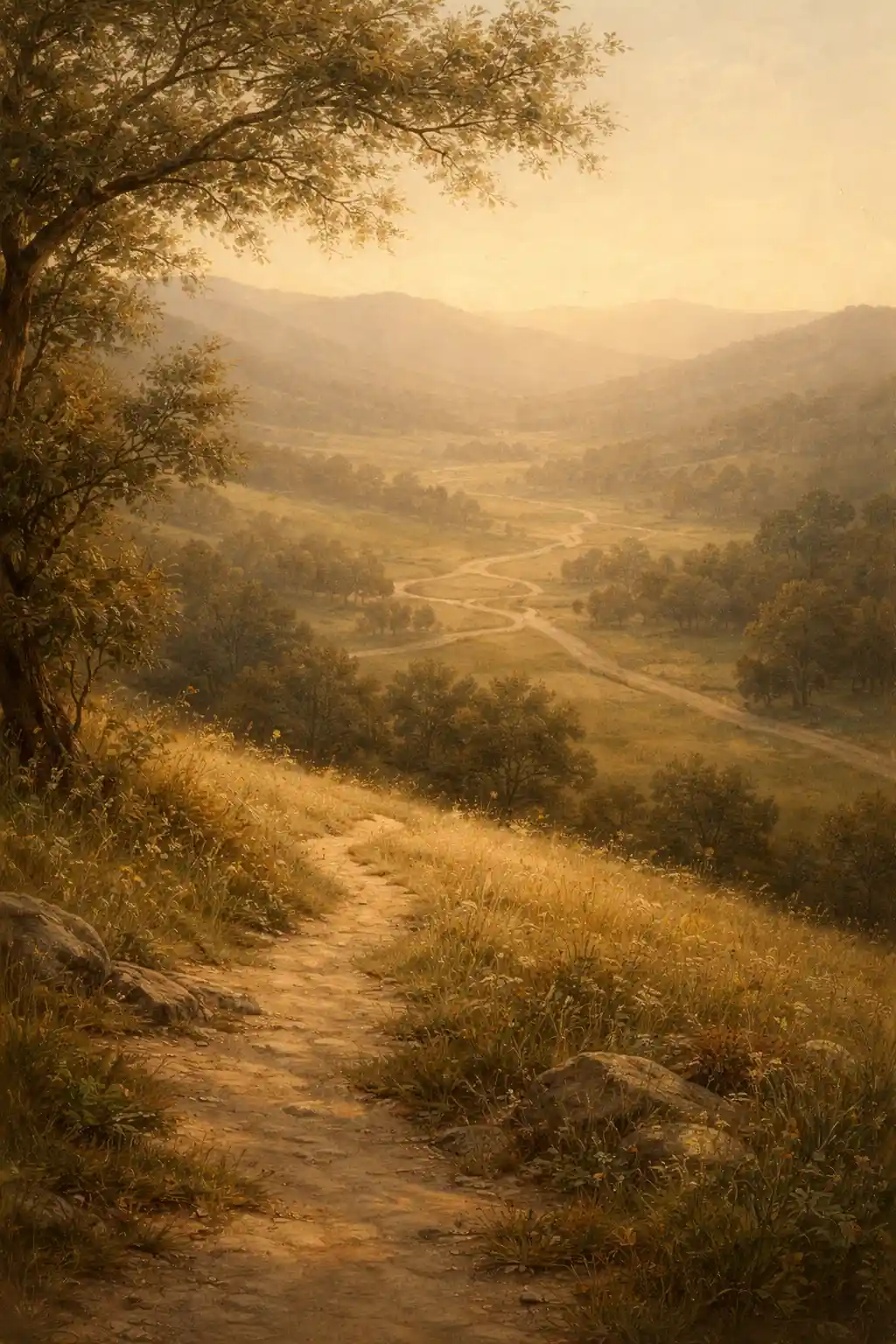
This landscape is your mind.
The pathways represent all the actions you could take. A bagel for lunch, or a baguette. Watching a sitcom on Netflix, or a documentary. Whether to go for the promotion, or quit your job to find yourself.
The valleys are the experiences that feel good: the simplicity of relaxing in a hot bath, a holiday with your family, or maybe meeting someone and falling in love. We can feel a sense of gravity pulling us towards them.
The mountains are our stressors, our insecurities, the thoughts we don't want to have, the conversations we have to avoid. We do everything we can to avoid taking these mountain paths.
The energy is the fuel our brains use, to plan, to think, to cope. It's limited and when stress takes over it is used up just trying to survive. We lose the ability to see clearly, to find the paths out. We can't see them on our landscape, even if someone else points them out.
This is why we shut down, why we avoid, why we keep making the same mistakes, even though we know better.
It's not a flaw or a weakness. It's just how our landscape works.
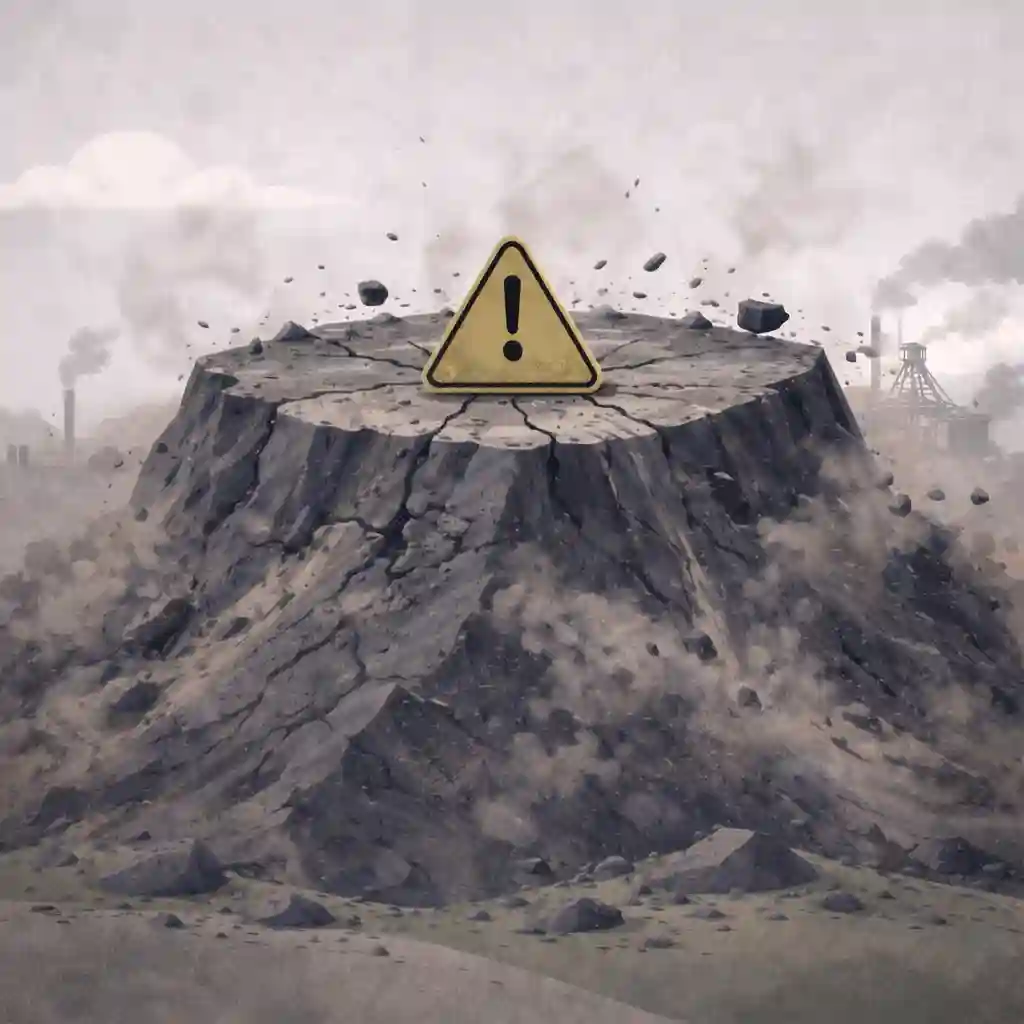
Our energy limit stops us being the person we want to be.
When we feel stressed this resource is directed away from our logical brain and towards our most reactive. The regions that enact fight or flight. We lose our ability to think calmly. To consider long term consequences. Everything becomes about survival and how to get through this unbearable present moment.
Some people have a gentle landscape with deep valleys and small hills. In daily life they barely reach their energy limit. Others have their own Himalayas. They live under a constant threat of hitting their mountains. And because they are so close to their energy limit little triggers can push them right up to their limit. This creates hypervigilance, which in turn requires mental energy. It's a catch-22—they need that hypervigilance because they're more vulnerable to triggers. But the energy it requires means they reach the limit more easily. This energy limit is a height on our landscape we cannot go above.
When you're at your energy limit, you cannot see the paths out—even if other people point them out. You're living in survival mode. Everything becomes too stressful, too hard.
Even thinking about stressful situations is enough to take us up our mountains. This is why we avoid thinking and doing things that are stressful, we don't want to hit our energy limit.
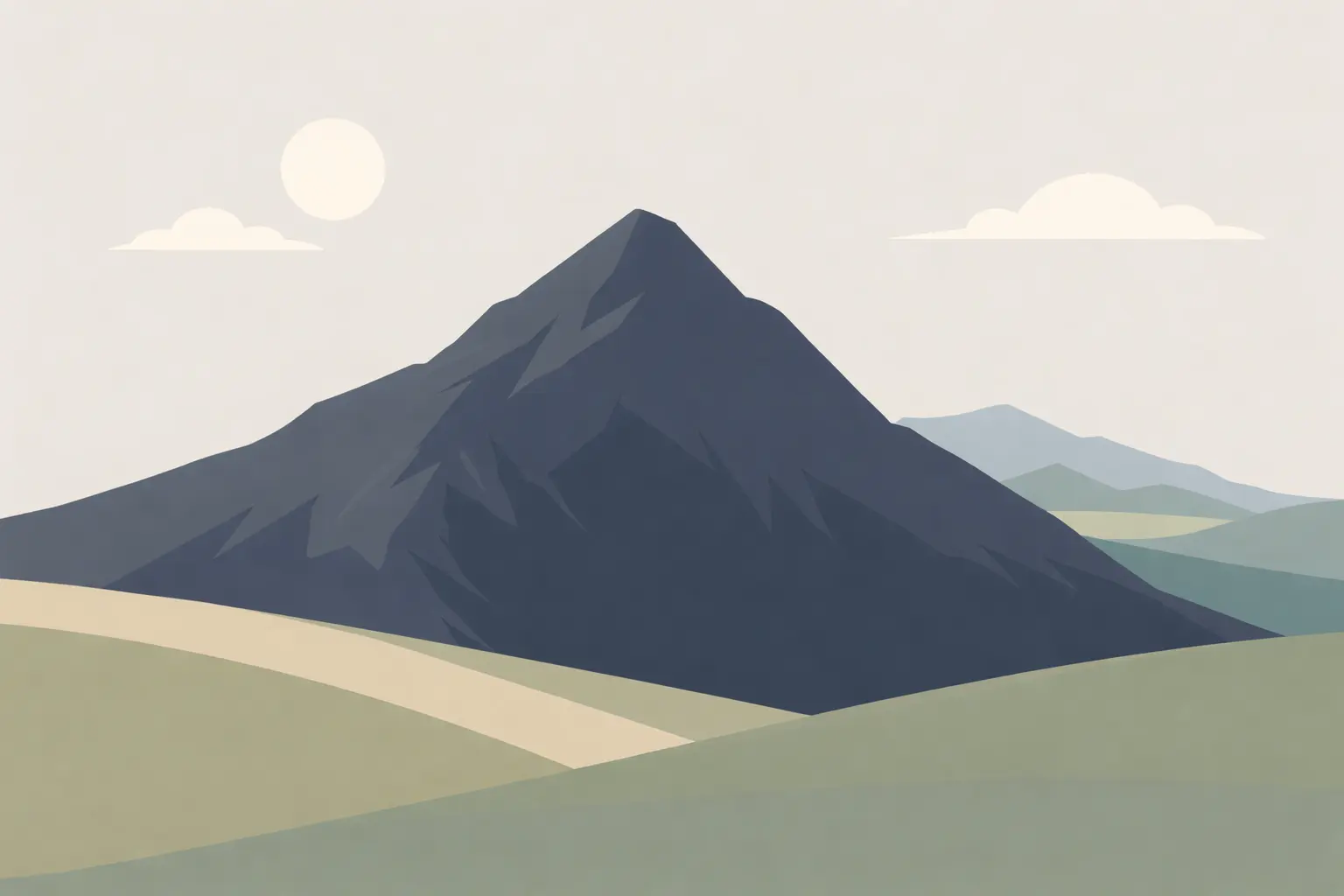
Our mountains are the deepest hurts we spend our lives trying to avoid.
Terrain we spend our lives navigating around. They could be a painful past experience, like a car crash. Or they could be more innate, like our deepest insecurities. The thought that we are unworthy of love, or incapable of sustaining closeness healthily.
These innate insecurities are our core beliefs. Often in childhood, extreme moments that shape our landscape profoundly. In adulthood we are so used to their presence we barely notice them. They're the "truths" we map our daily lives around. "I'm too much." "I'm not enough." "I can't trust anyone." "I'm unworthy of love."
We don't want to go to these places. Even thinking about them takes us up their slopes. So we spend our lives navigating around them. Trying to avoid the paths that lead to them. And when something does take us there, even something small, tangentially related it can feel unbearable. Because it's not about this moment. It's about everything the mountain represents.
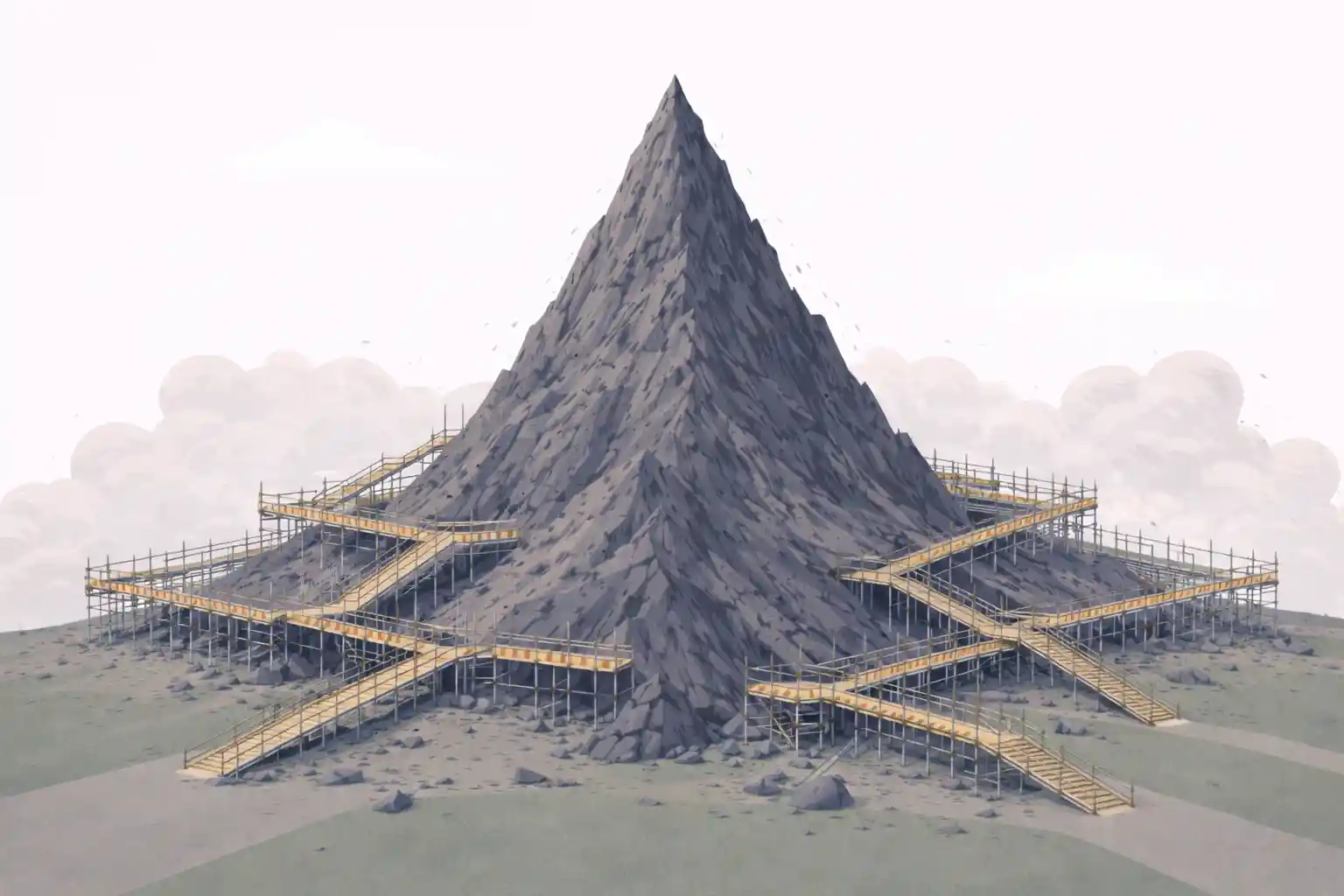
Our structures are the strategies we mistake for who we are.
They are the rules we live by, the boundaries we place on others, and the lies we tell ourselves. They are our defense mechanisms, our maladaptive coping strategies. The things we do that tend to hurt ourselves and others.
We build barricades, diversions, bypasses—whole systems designed to avoid the mountain paths.
They sit over the top of the natural landscape, and were built to keep us safe. But when life and circumstances change we hang onto them, because they were our safety, our survival.
Maybe we pick fights to create distance. To get space so we can calm down. Maybe we shut down and can't speak. Maybe we appease and accommodate to keep the peace. Maybe we need to know where our partner is at all times. Maybe we leave before we can be left.
These strategies kept us safe once. Maybe the only way to be cared for as a child was to make ourselves small. Maybe chaos was the only way to be noticed. It's backwards, but it worked. So we keep doing it, even when it no longer makes sense.
And this is our painful catch-22. The very structures we need to keep us safe are the ones stopping us from finding the real safety of being accepted for who we are. The more we try to prevent people from hurting us, the less room we allow them to prove our insecurities wrong.
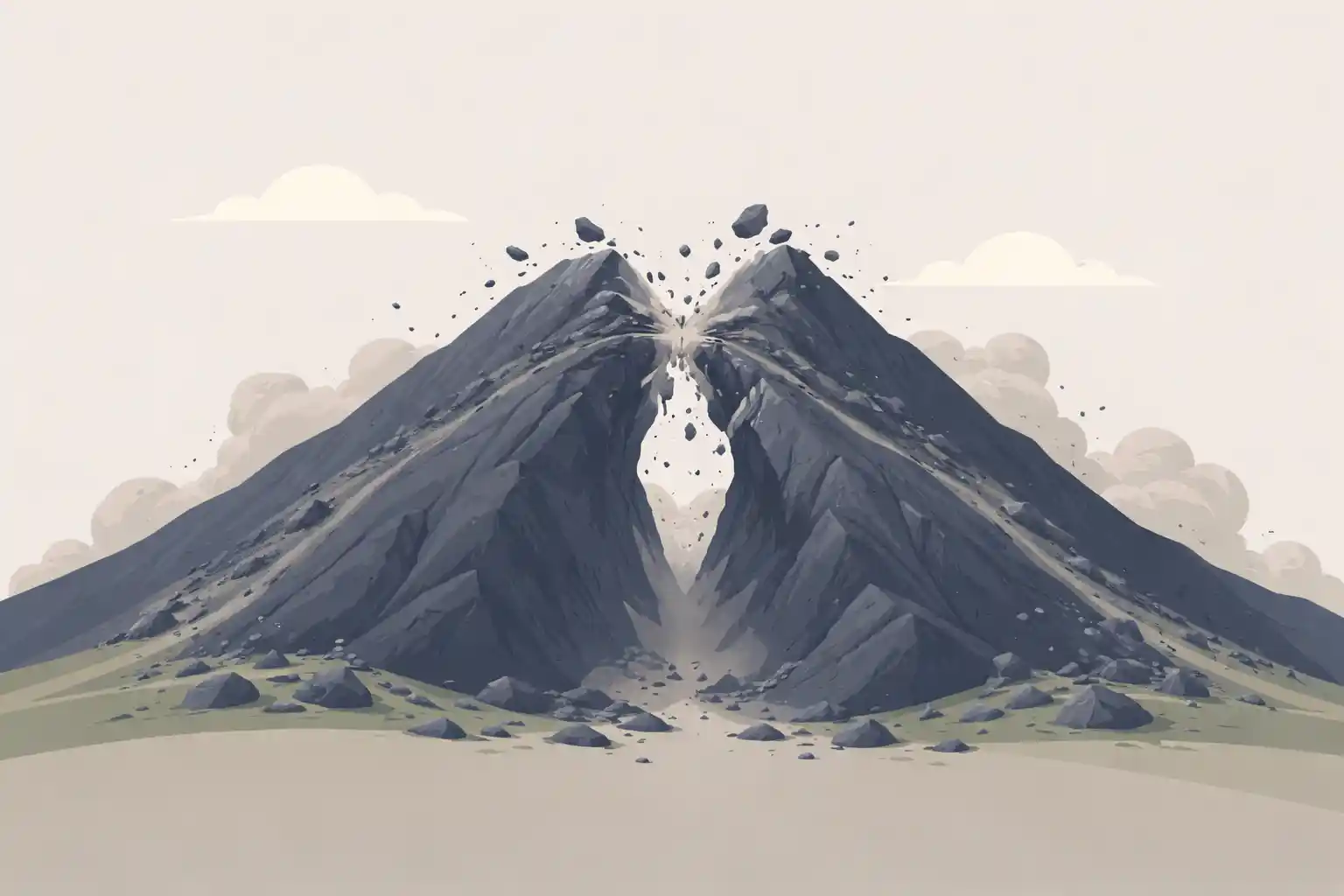
How our mountains slowly lose their power over us.
Gradually, through counter evidence and the risk of being truly seen.
But this is not about trying harder. Trying to control ourselves better doesn't help the crisis, it's just avoidance, more rigid structures. And it eventually escalates inside us until we reach the point where we can't control it any longer.
Being kind to ourselves is what actually helps us heal. Accepting others and ourselves for who we are, not who we hope we can become. Because true, deep healing comes from forgiving our mistakes and learning there is beauty in the messy reality of being human. And that that is a gift more valuable than perfection.
But we need to be careful. Because the more we shame ourselves into healing better, faster, healthier the tighter we build our structures. We learn the right words. Boundaries. Triggered. Toxic. And change our structures for more socially accepted ones. Mistaking their sophistication for health. But often we've just built a new bypass with better branding.
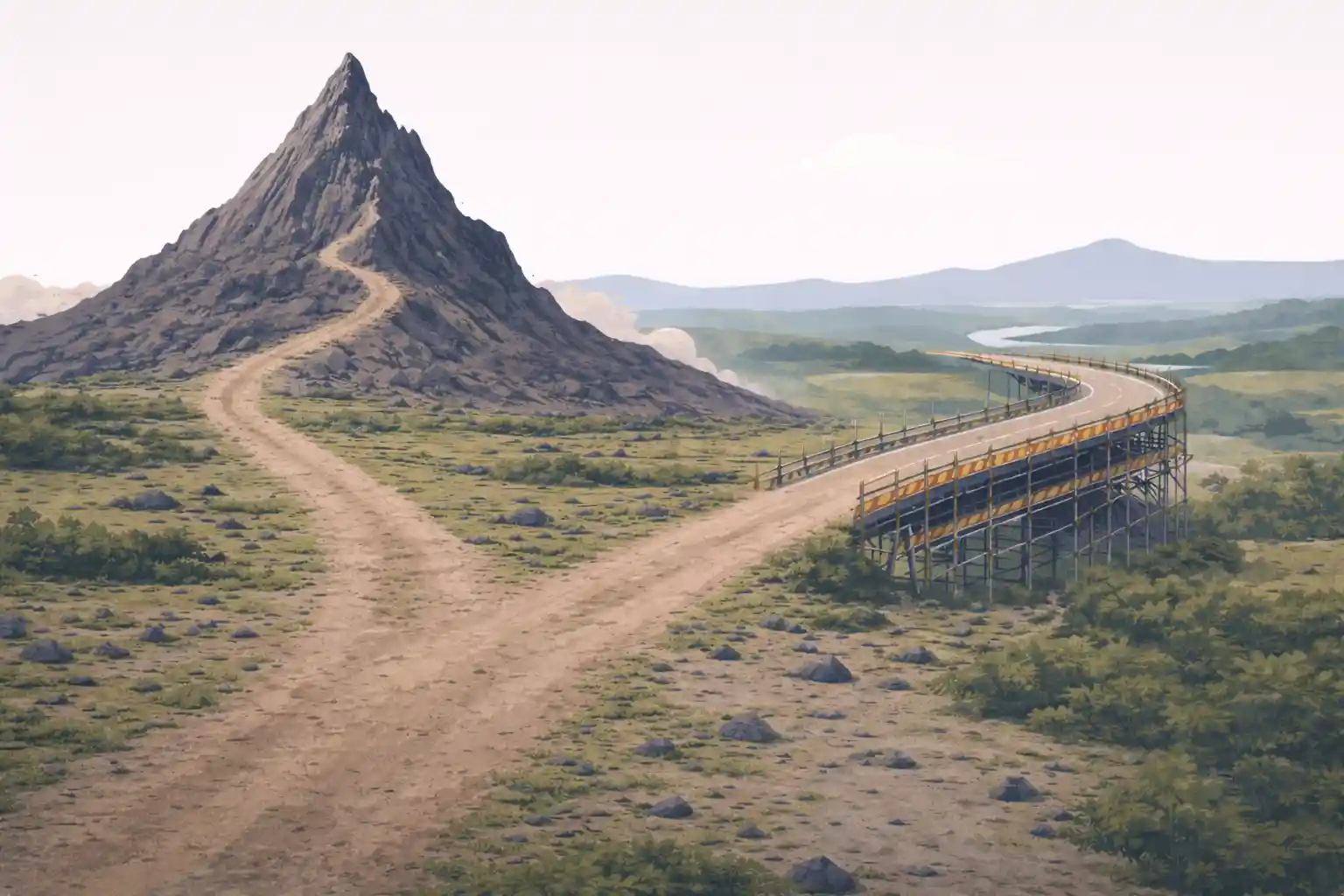
The very structures we need to keep us safe are the ones stopping us from finding the real safety of being accepted for who we are.