We build protective structures to keep us safe from our mountains.
These are our defence mechanisms, our tactics, our rules. The structures we've engineered over the landscape to manipulate the pathways we take.
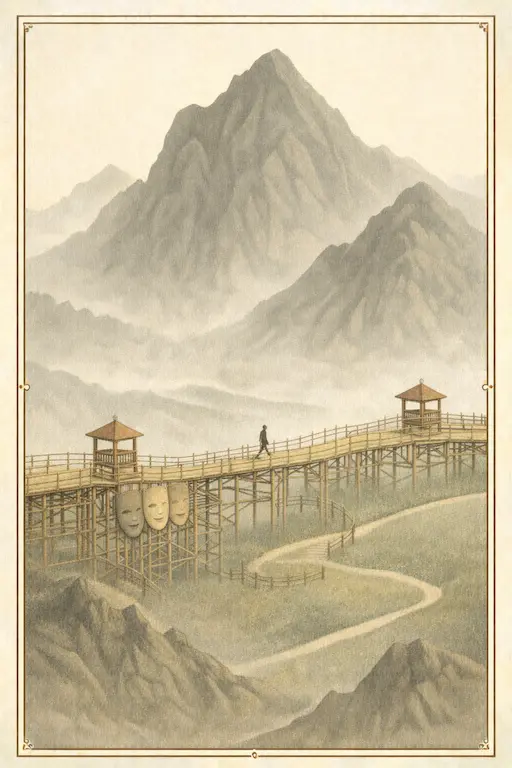
They're like scaffolding that we build upon our natural landscape. Their energy cost is higher than the natural ground level. But it feels worth it for the extra safety we gain. They're our shield — with the sole aim of stopping us taking the mountain paths. No matter what life throws at us.
Our structures are built from our strengths — our intellect, our charm, our practicality. Because when faced with the task of survival, of course we assign our best tools to it.
So, when we're triggered. When we feel that restless anxious energy building within us, about to take us up our mountain. It's these structures that allow us to choose that sneaky sidestep, and take the safer bypass instead.
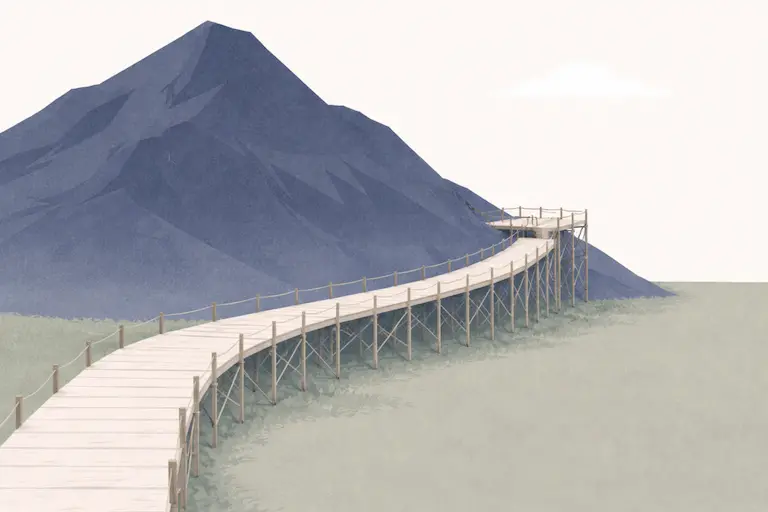
Often our mountain pathways feel too dangerous to take. So we block them off with new paths.
Facing up and feeling our insecurities is painful so we often avoid it at all costs. We even avoid thinking about them. To do this we build bypasses directing us away from our mountains.
Maybe it's the little lies to ourselves "I never cared about them anyway" to stop us feeling the pain of them choosing someone else. Maybe it's the pathway where we don't apply for our dream job because we're too scared of failing. Or the rules we try to live by: "I'm not out of control — I wake up at 5am, I never miss a workout, everything is regimented."
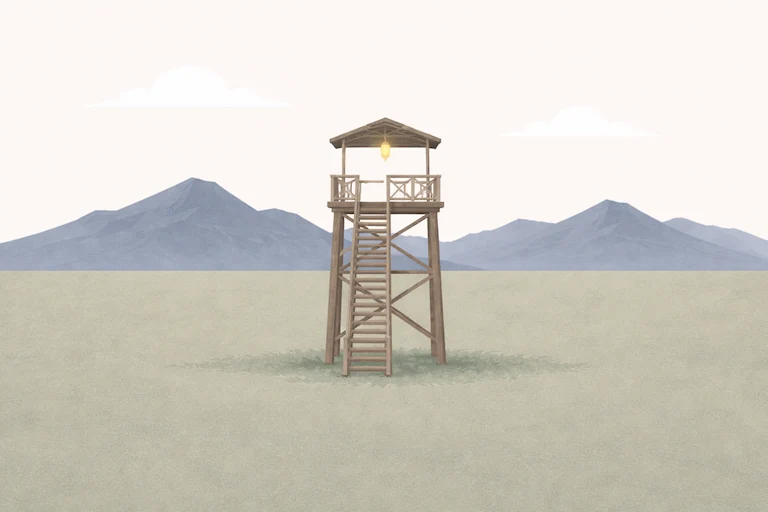
Our watchtower is our hypervigilance, always on the look out for signs of danger.
The watchtower is always staffed. By the corner of our eye. The back of our mind. Its salary paid by the energy of anxiety.
Even in the seemingly perfect moments we are still watching. Is this person still trustworthy? Is this just a trick? Could they actually handle the real me? Because we can't risk letting someone's trigger happy mountains collide with our own.
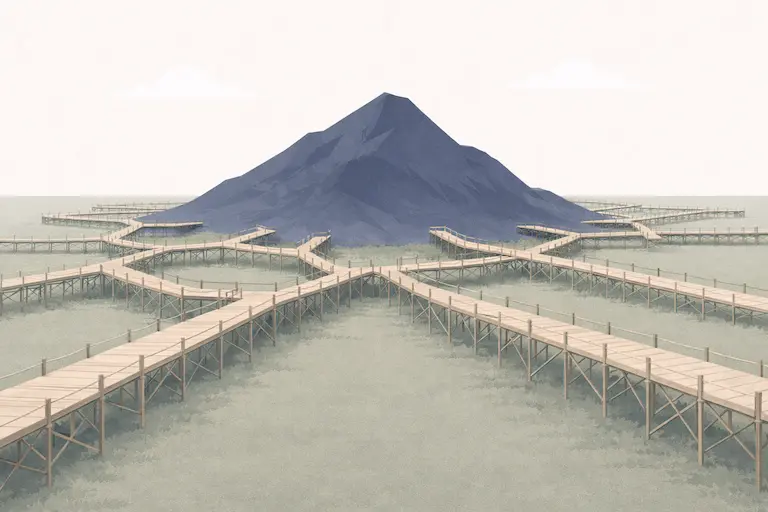
Over time — as we learn to detect threats earlier — the footprint of our structure expands.
Inevitably sometimes our structure will fail and we will be thrown into our mountains. And whether consciously or subconsciously we examine the debris and the wreckage, and feel the pain of the mess scattered everywhere. The hurt feelings — ours and theirs. The shame. The consequences. So we resolve to never let it happen again.
We add new features, new walkways. We resolve next time we won't fall for the same tricks. Next time we will be more understanding. Or less honest. Or less naive. The next time we let someone close we will be wiser, and won't make the same mistakes.
Over time the footprint expands further and further. Eventually stretching far away from the mountain it was built to protect. We are probably living on our structures the majority of the time, and we don't even remember the reasons why.
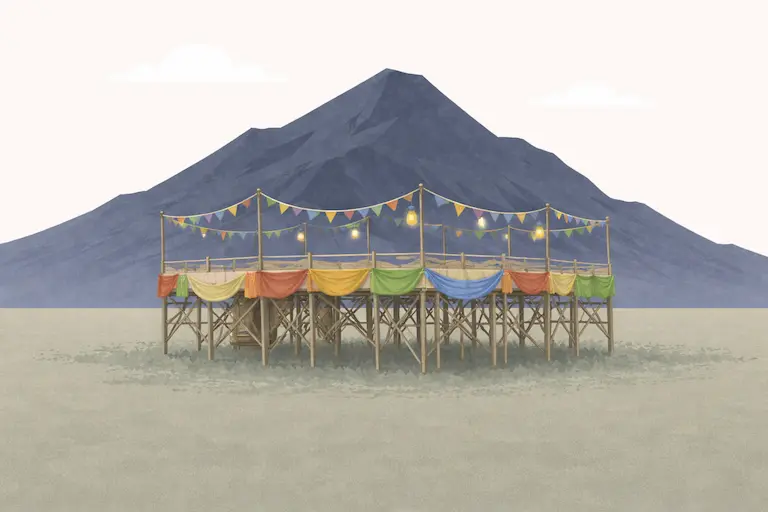
Our structures are often not pretty, sometimes they are downright cruel so we hide them.
We often cover our structures with a mask. We might make them bold and beautiful. We crave attention, so we create situations where everyone is watching us. Or we camouflage them with lies. Or maybe we just push people away so they can't get close enough to see them.
Our structures and their masks are often the most noticeable things about us. The things about us that don't quite make sense to others. The decisions we make that seem to just keep getting us hurt.
The saddest truth is that our structures always fail us. Even when they work perfectly. Even when we get the validation we were chasing. It's never real. It never soothes the wound that still wants to heal.
But to put them aside. To risk being vulnerable. It's bound to get us hurt. Because what's certain in life? Death, taxes, and being hurt by others. Especially the ones who love us the most.
They're navigating their own mountains too. Hitting their own energy limits. So asking them to pause. To hear our honesty. Our openness. Just for a second. It could be asking for more than they have to give. And then, even after all that risk, all that vulnerability, we could end up even more hurt. Even more alone.
But we can't heal ourselves either. Our core beliefs were supported by evidence. They were learnt. They were what kept us safe. We can't write over them until we know the alternatives are safe. Until we've seen different outcomes. Gathered enough counter-evidence. And we can only get that from the real, messy, imperfect people in our lives.
The very people we need to heal us are the ones destined to hurt us. And the very structures we need to keep us safe are the ones stopping us from finding the real safety of being accepted for who we are.
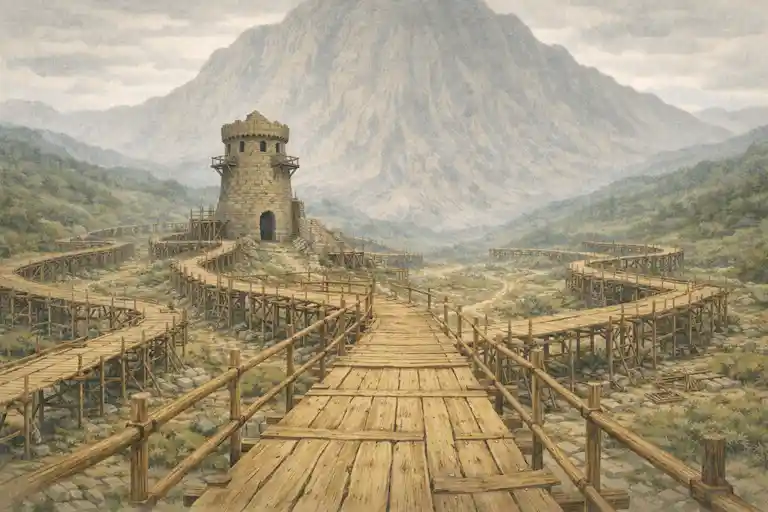
Marcus has a core belief that he is inadequate. No matter what he achieves it's never enough. He's always trying to collect enough evidence that this is not true, while also living around the belief it is true.
Marcus can't bear to think about his inadequacy. The thought takes him right up his mountain beyond his energy limit. So he's not really aware that he lives his whole life compensating for the belief. He can't hold the thought. But every time he fails at something he feels it. The mountain.
Because the stress of mountain is so extreme Marcus has a bypass. He works hard. He believes anyone can achieve if they work hard enough. Hard work can compensate for anything. He wears his bypass with pride.
Marcus is always working hard. Striving to do better, achieve more. Desperately trying to prove his mountain wrong. He believes if he can just work hard enough the tightness from the mountain of inadequacy will finally leave him in peace.
But at the same time, he is careful not to take on tasks that are too hard. Because his mountain tells him he will fail them. Despite all his hard work he is playing his life safe. His watchtower is always protecting him from taking paths that might lead to his mountains. The structure is keeping him safe from his mountain, but it's also stopping it from eroding.
Marcus is desperately trying to build up a buffer. If he can build up enough money he can finally rest. He won't have to carry the fear of his failure if his failure won't have consequences. He can stop all the hard work, and enjoy life. He wishes his partner could share some of the burden. Or at least not make it worse. But they keep messing everything up. A trinket here. A takeaway there. A crack in his defence. It makes him feel like his partner doesn't respect everything he's striving for. It makes him feel like his partner doesn't respect him.
His watchtower is keeping score. His bank balance his measure of his success. The black and white proof against the mountain.
And his partner is always falling short. Not just on frugality, but more importantly on respect. Marcus lives on constant guard. He tries not to, but he can't help notice every time his partner slips up. Every splurge. Every failure to stick to the rules. And every time it happens, a quiet rage builds. A raw indignation at the injustice.
His partner forgets to cancel a subscription. It's £9.99. They apologise. Say they are sorry. But Marcus can't let it go. Because it's not about £9.99. It's about the pattern. The disrespect. The proof that they doesn't care about everything he's sacrificing.
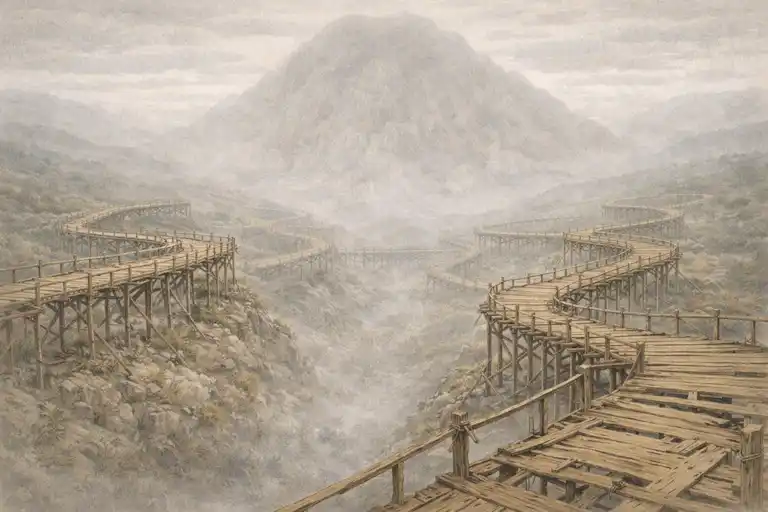
Rachel doesn't know who she is. Not really. Sometimes she feels she can grasp it, but it's fleeting. But there's an emptiness she can't quite place.
When life is quiet Rachel has an uncomfortable nagging. A feeling that she's nothing. If she doesn't have an action, an anchor to tie herself to, she might just drift into a whole other person. Another performance, taking her even further from her true self.
So Rachel is always moving, always planning, always acting. If she can define herself by her actions she feels solid. Tangible. She's the one who keeps her friendship group going. She organises the events. She buys the gifts, keeps everyone together. She's indispensable. Everyone loves her. Appreciates her.
In those moments she knows who she is. The validation, it props her up. Keeps her going. It's the structure, protecting her from her mountain. Her friends know who she is. She knows who she is. Because she's constantly demonstrating it. Proving it.
Rachel's calendar is never empty. It can't be. When there is a gap the anxiety creeps in. Without an audience who is she? A person or a collection of charming anecdotes?
But the actions are just the bypass preventing her from finding out who she really is. What she really wants from life.
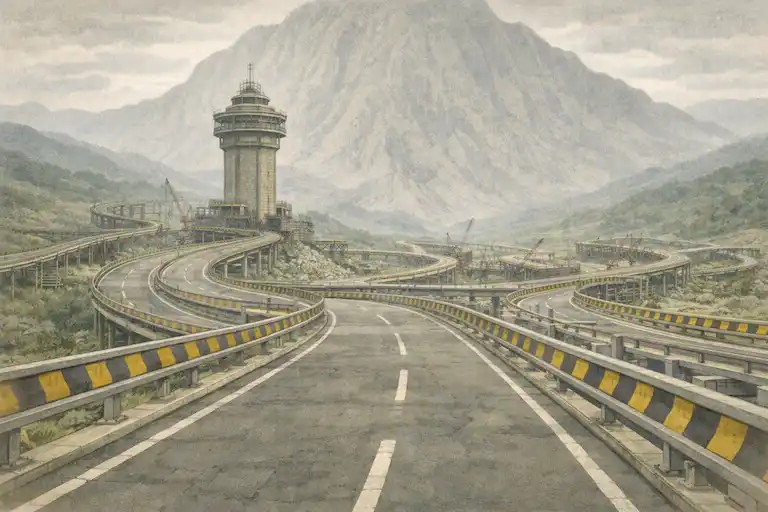
Nadia has a core belief that her needs don't matter. That when they come into contact with another person's needs, hers will always lose.
Nadia has done the work. Therapy. Books. Podcasts. She knows her patterns. She can name her attachment style. She understands why she used to shrink herself in relationships.
And she's not doing that anymore. She's learned to take up space. To ask for what she needs. To set boundaries. She's finally growing.
When Nadia meets someone new, she's upfront. "I have anxiety. Sometimes I need extra reassurance. If that's too much for you, I understand." She's being honest, isn't she? Clear. Setting expectations.
When her partner does something that hurts her, she names it. "That triggered me." "I need you to respect my boundaries." She's doing everything right. Using all the correct language.
Her partner is stressed about work. He's been distant for a few days. Nadia feels the old anxiety rising. The fear that she doesn't matter.
But she doesn't shrink this time. She tells him she's feeling triggered. That she needs him to be more present. That this is a boundary for her.
He tries to explain that he's overwhelmed. But she's learned not to abandon herself for someone else's comfort. So she holds firm. She feels strong. Empowered.
But underneath the language, nothing has changed. She's still trying to control his behaviour so she doesn't have to feel her mountain. She's just found a way to make it look like healing.
The saddest truth is that these structures always fail us. Even when they work perfectly.